Rich Lives, Poor Lives
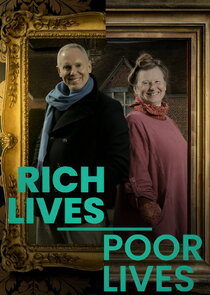
Description:
In Rich Lives, Poor Lives, Rob and Ruth follow the stories of real people who lived through extraordinary moments in British history - from Emperor Hadrian's visit to Britain, to the arrival of the Spanish Armada and Railway mania in the 1840s.
They uncover gripping stories of survival, resilience, and question how wealth shaped your experience. Was it luck, grit, or the size of your bank balance that got you through?
Network: 5
Country: United Kingdom
Cast

Robert Rinder
as Robert Rinder
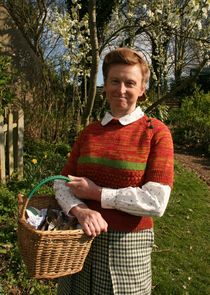
Ruth Goodman
as Ruth Goodman
Episodes
A look back at when England braced for the arrival of the Spanish Armada in 1588. Rob follows the story of wealthy London merchant Thomas Cordell, who risked everything when Elizabeth I called on private ships to face the Spanish Armada, while Ruth traces the experiences of sailor William Browne and his wife Margaret as war tore families apart.
In this episode of the Rich Lives, Poor Lives strand, Rob and Ruth travel back to 1820, as Britain prepares for the coronation of King George IV. One of the most lavish and controversial royal events in British history is about to unfold, and people across the country are swept up in the excitement and the eyewatering expense. Litttle did they know the gossip and drama would also include tragedy.
Rob follows the fortunes of those at the heart of the royal court. New monarch George IV, is determined to stage a coronation unlike anything Britain has ever seen, sparing no expense in his pursuit of splendour. But as preparations gather pace, a major threat emerges. His estranged wife, Queen Caroline, returns to Britain determined to claim her place beside him. Rob also explores the world of London's wealthy through Lady Jersey, one of the capital's most influential society hostesses. At balls and elite salons all over the city, gossip, scandal and political intrigue swirl around the coming ceremony.
Meanwhile, Ruth uncovers the lives of ordinary people caught up in coronation fever. Like carpenter Richard Honey, a single father trying to make ends meet in the overcrowded streets of Soho. While in Staffordshire, eleven year old apprentice potter Samuel Bevington works long into the night helping to produce the luxury tableware the King requires for his magnificent banquet. For Richard and Samuel, the coronation brings opportunity, but also exposes the stark realities of life for Britain's working poor.
As the great day approaches, Rob and Ruth discover how rich and poor alike became part of a royal spectacle on an unprecedented scale. They reveal what happened when the nation gathered to witness the crowning of its new king, and how the drama did not end when the celebrations were over. And for those swept up in the turbulent events that followed, the consequences would prove devastating.
In this episode Rob Rinder and Ruth Goodman delve into 122 AD, when the great Emperor Hadrian made a dramatic visit to Roman Britain, a moment that would change the fortunes of rich and poor alike.
Rob follows the powerful figures at the heart of Roman Londinium, like Quintus Pompeius Falco, the governor of Britain, who faces the biggest test of his career as he prepares to host the most powerful man in the known world. Desperate to impress, Falco stages lavish banquets, spectacular entertainments and a grand welcome for the Emperor. But will his efforts get the thumbs up or thumbs down?
Rob also uncovers the story of Hadrian himself, the hands-on ruler who travelled thousands of miles across his empire and arrived in Britain determined to inspect its troubled northern frontier and oversee one of Rome's most ambitious building projects: Hadrian's Wall.
Meanwhile, Ruth investigates the lives of ordinary people living under Roman rule. People like Marcus, a struggling bar owner, who hopes to cash in on the arrival of thousands of visitors flooding into Londinium.
And Fortunata, an enslaved woman whose life is captured in one of the most extraordinary discoveries from Roman London: a tablet recording her sale. Through her story, Ruth discovers the realities of slavery in Roman Britain and explores the chances some enslaved people had of building a better future.
As Hadrian's visit unfolds, Rob and Ruth reveal how the Emperor's arrival impacted life across Roman Britain, from the grand villas of the rich, to the crowded streets of Londinium.
And for Governor Falco, the stakes could not be higher. If he succeeds in impressing the Emperor, he moves one step closer to the prestigious posting he craves. If he fails, his career could collapse overnight or even worse, his whole life could be ruined.
In this episode, Rob and Ruth travel back to the 1840s when railway mania swept Britain and transformed the fortunes of rich and poor alike.
Rob follows the wealthy Victorians who poured their money into the railway boom. First is businessman George Hudson, known as the ‘Railway King', who seized on the craze to build a vast personal empire. Rising from humble beginnings in a draper's shop, Hudson became an MP, one of the most powerful figures in Britain, and even met Queen Victoria. But when the railways boom slows, his fortune hangs in the balance. Rob discovers how Lord Morpeth, an aristocrat who embraced the railways, allowed a new station to be built on his land and unusually opened his grand country house to ordinary people, giving them a rare glimpse of life at the top.
Meanwhile, Ruth investigates the lives of those who built and worked on the railways. Thomas Eaton was one of hundreds of thousands of navvies whose gruelling labour made the new network possible. Working in dangerous conditions, many risked injury or death, and some were left destitute when the railway bubble burst. Ruth also uncovers the story of Mary Arguile, Britain's first female station mistress. Born into a poor working-class family, she used the opportunities created by the railways to rise through society, eventually running Merry Lees station as part of George Hudson's growing empire.
As railway mania reached its peak, Rob and Ruth discover how the expanding network opened up new possibilities for ordinary people, from affordable seaside trips to access to fresh food. Yet while the railways created unprecedented opportunities, the financial crash that followed threatened ruin for those who had staked everything on the boom.
Rob and Ruth uncover how the Blitz was experienced by those from different backgrounds.
The duo relive the Great Fire of London through the eyes of both the rich and the poor.
The duo explore the devastating impact of 1665's Great Plague on London's rich and poor.